Understanding the Evolution of Zirconia in Esthetic Dentistry
Zirconia has become a cornerstone material in modern restorative dentistry due to its strength, durability, and versatility. While early generations of zirconia prioritized mechanical performance over appearance, advancements in material science have introduced more esthetic options, including layered zirconia. This approach combines the strength of a zirconia core with layered ceramic to enhance translucency and lifelike detail.
Layered zirconia addresses one of the primary limitations of monolithic zirconia: its relatively uniform appearance. By adding layers of ceramic, technicians can replicate the natural variations found in enamel and dentin, resulting in restorations that blend more seamlessly with surrounding teeth. Panam Dental Lab, serving the communities of Savannah, GA, Houston, TX, and Sandy, UT, can help teams understand when and how to use layered zirconia with ideal outcomes.
What Is Layered Zirconia?
Layered zirconia restorations consist of a high-strength zirconia substructure that is veneered with esthetic ceramic materials. The zirconia core provides durability and support, while the outer ceramic layers are used to create depth, translucency, and color variation.
This combination allows technicians to mimic the optical properties of natural teeth more effectively than monolithic materials alone. The layering process involves applying different ceramic materials in stages, each contributing to the final appearance of the restoration.
Layered zirconia is commonly used in anterior and highly esthetic cases where visual detail is critical. It is often selected when patients have high expectations for natural-looking results or when restorations are placed in the smile zone.
Comparing Layered Zirconia and Monolithic Zirconia
Monolithic zirconia restorations are fabricated from a single block of zirconia, making them extremely strong and resistant to fracture. These restorations are well-suited for posterior applications where occlusal forces are high and esthetic demands are moderate.
However, monolithic zirconia can appear more opaque compared to natural teeth. While newer formulations have improved translucency, they may still lack the depth and characterization achieved through layering.
Layered zirconia, on the other hand, offers superior esthetic potential by incorporating multiple layers of ceramic. This approach allows for more precise control over color gradients, translucency, and surface texture. While slightly more technique-sensitive, layered zirconia provides a level of realism that is often preferred in anterior restorations.
Both options are used within fixed restoration workflows, with material selection guided by the specific functional and esthetic requirements of each case.
Enhancing Translucency and Depth
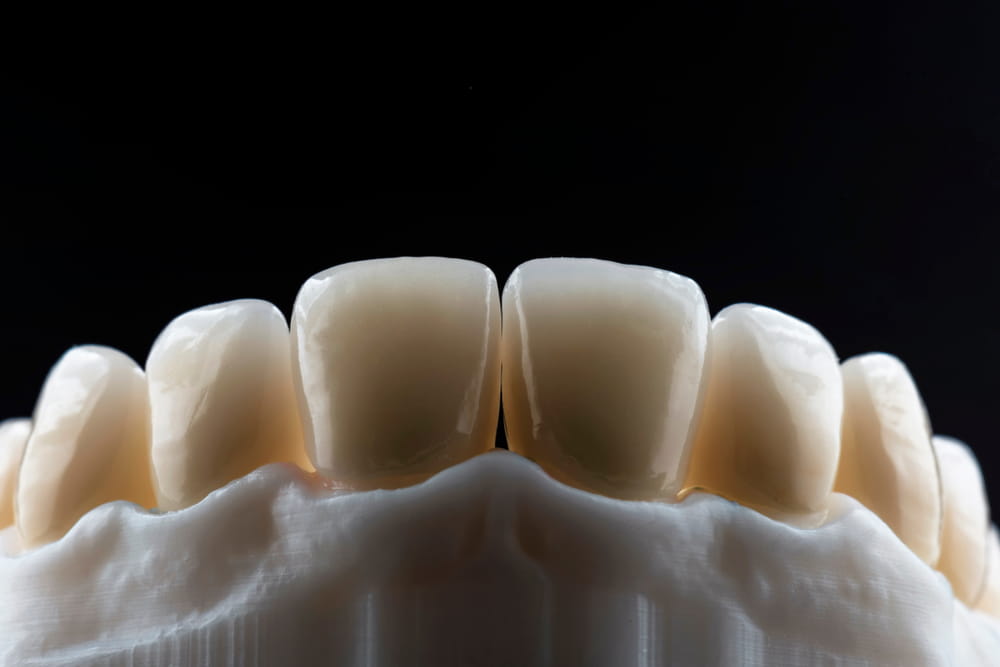
One of the key advantages of layered zirconia is its ability to replicate the translucency of natural enamel. Teeth are not uniform in color or opacity; they exhibit subtle variations that change depending on light conditions and viewing angles.
Layered ceramic materials allow technicians to recreate these effects by controlling how light passes through and reflects off the restoration. Incisal edges can be designed with increased translucency, while cervical areas can be built with slightly higher opacity to mimic natural dentin influence.
This layering technique creates depth within the restoration, making it appear more lifelike. The ability to replicate these optical characteristics is particularly important in anterior cases where even minor discrepancies can be noticeable.
Surface Characterization and Texture
In addition to color and translucency, surface texture plays an important role in esthetic outcomes. Natural teeth have subtle surface irregularities that influence how light reflects across the enamel.
Layered zirconia restorations can be customized with detailed surface characterization, including perikymata, developmental grooves, and slight variations in contour. These features help the restoration blend more naturally with adjacent teeth.
Finishing and polishing techniques further enhance these effects by refining how light interacts with the surface. A well-characterized restoration reflects light in a way that closely resembles natural enamel, contributing to overall esthetic harmony.
Indications for Layered Zirconia
Layered zirconia is most commonly indicated for cases where esthetics are a primary concern. Anterior crowns, veneers, and multi-unit restorations in the smile zone often benefit from the enhanced realism provided by layering.
Patients with high smile lines or those seeking cosmetic improvements may also be good candidates for layered zirconia. In these cases, achieving a natural appearance is essential for patient satisfaction.
In more comprehensive treatment plans, layered zirconia may also be coordinated alongside implant restorations to ensure esthetic consistency across both natural teeth and implant-supported prosthetics.
Digital Workflows and Precision Layering
Digital dentistry has improved the consistency and precision of layered zirconia restorations. CAD/CAM technology allows for accurate design of the zirconia substructure, ensuring proper fit and support for the veneering material.
Digital tools also enable technicians to plan restorations with greater detail before fabrication begins. This includes evaluating contour, occlusion, and material thickness to optimize both function and esthetics.
In cases that involve broader rehabilitation or combined prosthetics, workflows may integrate with removable restorations to ensure harmony across different restoration types. This level of coordination supports comprehensive treatment outcomes.
While the layering process itself remains highly technique-sensitive and often involves skilled manual application, digital workflows provide a strong foundation for predictable results.
Balancing Strength and Esthetics
One of the main considerations when choosing layered zirconia is balancing esthetics with durability. The zirconia core provides excellent strength, but the veneering ceramic must be applied carefully to minimize the risk of chipping or fracture.
Proper framework design and material selection help support the veneering layer and reduce stress concentrations. Occlusal planning also plays a role in protecting the restoration from excessive forces.
In many cases, layered zirconia offers an effective balance between strength and esthetics, particularly when used in appropriate clinical situations.
Collaboration Between Clinician and Laboratory
Achieving optimal results with layered zirconia requires strong collaboration between the dental practice and the laboratory. Clear communication of esthetic goals, shade preferences, and case details allows technicians to create restorations that meet clinical expectations.
Photographs, shade maps, and digital records provide valuable information for the layering process. These references help technicians replicate natural tooth characteristics more accurately and ensure that the final restoration integrates seamlessly with surrounding dentition.
Ongoing communication throughout the fabrication process allows for adjustments and refinements, supporting more predictable outcomes.
Advancing Esthetic Dentistry with Layered Zirconia
Layered zirconia represents a significant advancement in esthetic restorative dentistry, offering the ability to combine strength with highly detailed, natural-looking results. Knowing when to use layered zirconia and how it differs from monolithic options allows clinicians to make informed decisions that support both function and esthetics.
By leveraging both digital technology and skilled craftsmanship, dental teams can achieve restorations that closely mimic the appearance of natural teeth. Panam Dental Lab, serving Savannah, GA, Houston, TX, and Sandy, UT, recognizes the value of layered zirconia in delivering restorations that achieve lifelike appearance, reliable performance, and consistent clinical success.
Sources
Denry I, Kelly JR (2014). State of the art of zirconia for dental applications. Dental Materials.
Kelly JR, Benetti P (2011). Ceramic materials in dentistry: Historical evolution and current practice. Australian Dental Journal.
Magne P, Belser UC (2003). Bonded porcelain restorations in the anterior dentition. Quintessence Publishing.