Understanding the Role of Digital Records in Modern Dentistry
Digital technology has transformed how dental practices manage patient information, treatment planning, and restorative workflows. One of the most impactful advancements is the ability to capture, store, and access digital records efficiently. These records include intraoral scans, radiographs, photographs, and design files, all of which contribute to a more comprehensive view of each case. For dental teams working with Panam Dental Lab across Savannah, Houston, and Sandy, digital records play an essential role in improving case tracking and supporting long-term restorative success.
Traditional record-keeping methods often rely on physical impressions, paper charts, and manually stored models. While effective, these approaches can make it difficult to retrieve information quickly or maintain consistency across multiple appointments. Digital records streamline this process by centralizing data in an accessible, organized format that supports both clinical efficiency and laboratory collaboration.
Enhancing Case Tracking and Organization
One of the primary benefits of digital records is improved case tracking. With digital systems, every stage of a patient’s treatment can be documented and stored in a centralized platform. This allows clinicians to review case history, monitor progress, and reference previous restorations without searching through physical files or storage systems.
Digital case tracking is particularly valuable for multi-phase treatments. When cases involve multiple appointments or different types of restorations, having immediate access to prior records helps ensure continuity. Clinicians can quickly review previous scans, occlusal relationships, and design details to guide future treatment decisions.
Organization also improves significantly with digital workflows. Cases can be categorized, labeled, and archived systematically, reducing the risk of lost or misplaced records. This level of organization supports efficient scheduling and helps practices maintain a clear overview of active and completed cases.
Supporting Remakes and Restoration Replacement
Digital records provide a significant advantage when remakes or restoration replacements are needed. In traditional workflows, recreating a restoration often requires starting from the beginning, including taking new impressions and repeating earlier steps. This can increase chair time and delay treatment completion.
With digital archiving, previous case data can be retrieved instantly. If a restoration needs to be remade, technicians can reference the original design files and make necessary adjustments without repeating the entire process. This efficiency is especially valuable for restorations fabricated through fixed restorations workflows, where precision and consistency are essential.
Digital records also support duplication of prosthetics. For example, if a patient loses a restoration or requires a backup, having a stored digital design allows for faster fabrication. This capability reduces inconvenience for patients and supports smoother clinical workflows.
Improving Communication Between Clinic and Laboratory
Effective communication between the dental practice and laboratory is critical for successful restorative outcomes. Digital records enhance this communication by providing clear, detailed information that can be shared instantly. Intraoral scans, photographs, and design files can be transmitted directly to the laboratory, eliminating delays associated with shipping physical impressions.
This improved communication allows technicians to review case details more thoroughly before fabrication begins. If additional information is needed, laboratories can request clarification quickly, helping prevent errors and remakes. Digital records also provide a visual reference that supports a more accurate interpretation of clinical intent.
For implant cases and complex restorations, detailed digital documentation is particularly valuable. Cases involving implant restorations benefit from precise records that capture implant positioning, soft tissue contours, and occlusal relationships. This level of detail helps ensure that restorations are designed to integrate properly with both anatomical and functional considerations.
Streamlining Treatment Planning and Collaboration
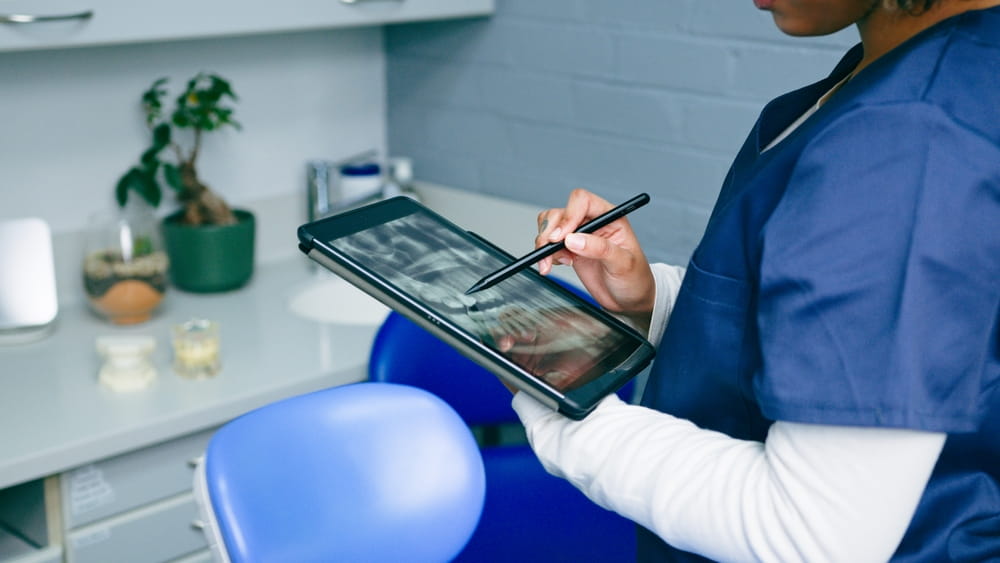
Digital records play an important role in treatment planning by allowing clinicians to visualize cases more comprehensively. Digital models can be analyzed from multiple angles, enabling more accurate evaluation of occlusion, spacing, and alignment. This level of detail supports more informed decision-making during the planning phase.
Collaboration also becomes more efficient with digital tools. Clinicians and technicians can review the same digital files simultaneously, discuss design options, and make adjustments before fabrication begins. This collaborative approach helps align expectations and reduces the likelihood of revisions later in the process.
Digital workflows also allow for integration with other technologies, such as CAD/CAM systems and digital design software. This integration supports a seamless transition from planning to fabrication, improving overall workflow efficiency.
Enhancing Long-Term Patient Care
Long-term patient care benefits significantly from digital record-keeping. Dental treatments often span many years, and having access to historical data allows clinicians to track changes in oral health over time. This information can be used to monitor wear patterns, evaluate previous restorations, and plan future treatments more effectively.
Digital records also support continuity of care when patients return after extended periods. Clinicians can review prior treatments quickly, reducing the need for repeated diagnostics and improving overall efficiency. This continuity is particularly valuable for patients who require ongoing restorative maintenance or staged treatment plans.
In addition, digital archives provide a reliable backup for patient records. Unlike physical models, which can be damaged or lost, digital files can be securely stored and duplicated, ensuring that important information remains accessible when needed.
Reducing Errors and Improving Workflow Efficiency
Errors in restorative workflows often occur due to incomplete records, miscommunication, or lost information. Digital systems help reduce these risks by standardizing how data is captured and stored. Clear digital records minimize ambiguity and provide a consistent reference for both clinicians and technicians.
Workflow efficiency improves when data is readily accessible and easily shared. Digital records eliminate the need for physical storage and reduce time spent searching for case information. This efficiency allows dental teams to focus more on patient care and less on administrative tasks.
Digital tools also support quality control by allowing clinicians to review records before submission. Identifying issues early helps prevent delays and ensures that cases move smoothly through the fabrication process.
Supporting Digital Denture and Prosthetic Workflows
Digital record-keeping is especially valuable for removable prosthetics and complex restorative solutions. Workflows involving digital dentures rely on accurate data capture and storage to ensure consistent results. Digital records allow technicians to reference previous designs, maintain occlusal relationships, and replicate successful outcomes when needed.
This capability supports both initial fabrication and long-term maintenance. If adjustments or replacements are required, having access to original design data simplifies the process and improves predictability. Digital archives also make it easier to create duplicate prosthetics, providing patients with backup solutions.
Advancing Dentistry Through Digital Record Integration
Digital records have become an essential component of modern dental workflows, improving case tracking, communication, and long-term care. By centralizing data and making it easily accessible, digital systems support more efficient treatment planning and reduce the likelihood of errors or remakes.
Understanding how digital records enhance case tracking allows dental teams to take full advantage of evolving technology. Panam Dental Lab, serving Savannah, Houston, and Sandy, recognizes the value of digital record integration in supporting consistent, efficient, and predictable restorative outcomes.
Sources
Joda T, Ferrari M, Gallucci GO (2017). Digital technology in fixed implant prosthodontics. Periodontology 2000.
Mangano F, Gandolfi A, Luongo G, Logozzo S (2017). Intraoral scanners in dentistry: A review of the current literature. BMC Oral Health.
Goodacre CJ, Garbacea A, Naylor WP (2012). CAD/CAM fabricated complete dentures: Concepts and clinical methods. Journal of Prosthetic Dentistry.