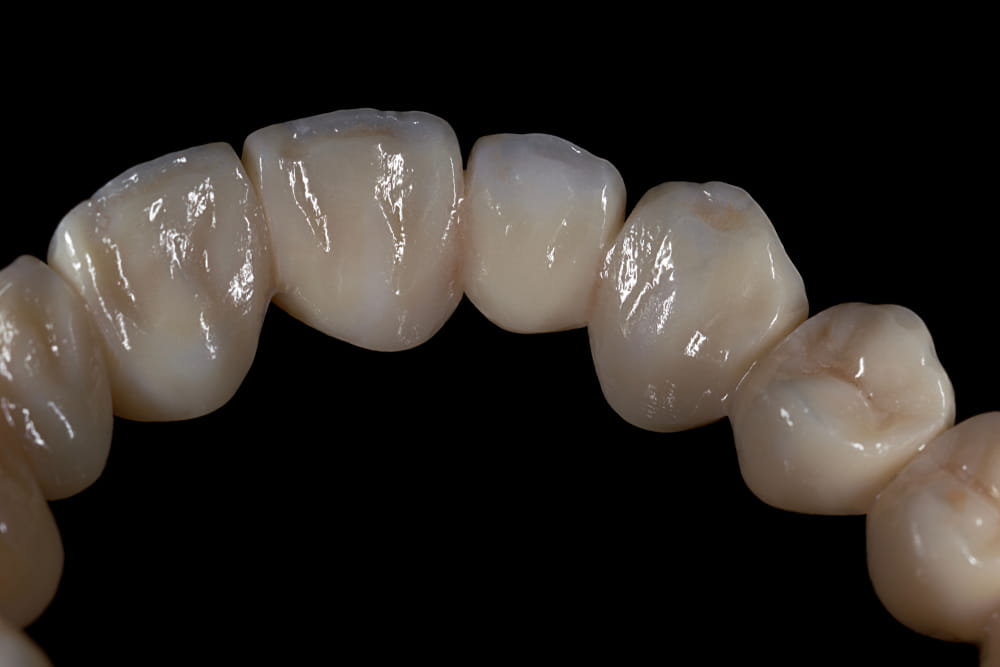
The most convincing implant crowns do not appear to sit on top of the gingiva. They transition gradually through the soft tissue, creating contours that resemble the emergence of a natural tooth. This transition affects more than appearance: it can influence tissue stability, plaque control, papilla support, crown proportions, and the patient’s ability to maintain the implant.
Emergence profile design becomes easier when it is addressed throughout treatment rather than left until final fabrication. Implant position, provisional contours, soft-tissue development, scan accuracy, and abutment design all contribute to the result. Panam Dental Lab works with practices in Savannah, Houston, and Sandy, where complete documentation and clear restorative objectives often make it easier to reproduce established tissue contours in the definitive crown.
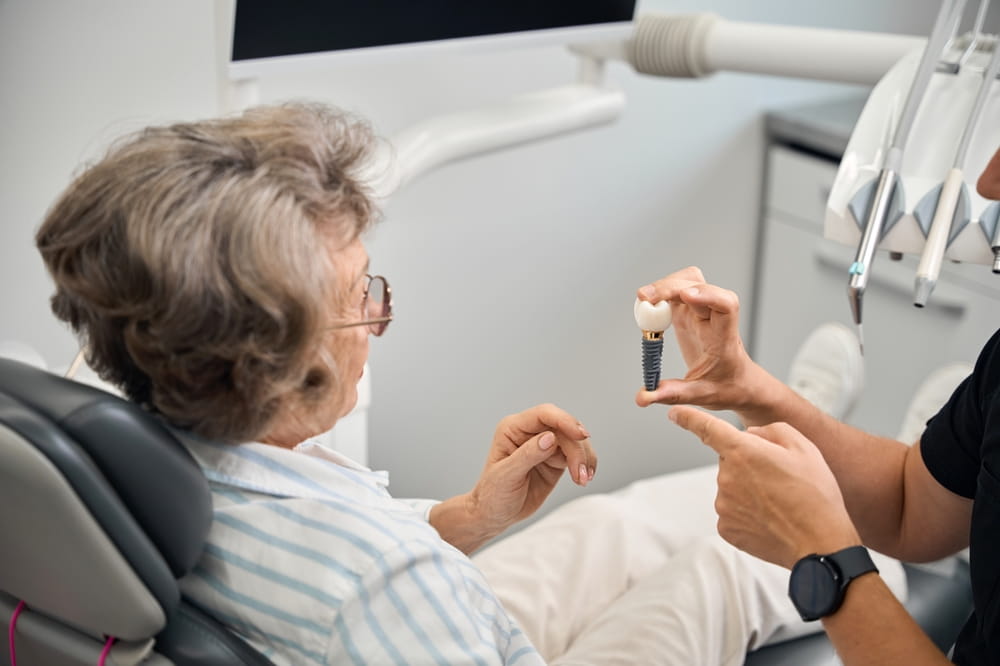
The emergence profile describes the contour of a restoration as it transitions from the implant platform or abutment through the surrounding gingival tissues toward the visible portion of the crown.
Natural teeth gradually emerge through the gingiva with smooth, gentle contours. Implant-supported restorations aim to reproduce this appearance while also supporting healthy soft tissue and providing access for oral hygiene.
A properly designed emergence profile helps restorations blend naturally with adjacent teeth, creating the illusion that the implant crown is emerging from the gingiva in the same way as a natural tooth.
Emergence profile design affects far more than appearance. Over-contoured restorations may place excessive pressure on the surrounding soft tissue, making oral hygiene more difficult and increasing plaque accumulation.
Conversely, under-contoured restorations may fail to support the gingival architecture adequately, resulting in dark spaces, incomplete papilla fill, or compromised esthetics.
Finding the appropriate contour allows the restoration to support soft tissue naturally while maintaining healthy biologic relationships around the implant.
Healthy peri-implant soft tissue plays a major role in creating attractive implant restorations. Even when the crown itself is beautifully fabricated, deficiencies in tissue support can diminish the final esthetic result.
The emergence profile influences how the gingiva adapts around the restoration and contributes to the appearance of papillae, gingival symmetry, and natural crown proportions.
Careful contour development helps maintain stable soft tissue architecture while creating a restoration that harmonizes with the patient’s existing smile.
Successful emergence profile design begins long before the final crown is fabricated. Modern implant dentistry follows a restoratively driven philosophy in which the desired restoration guides surgical planning rather than adapting the restoration to a compromised implant position.
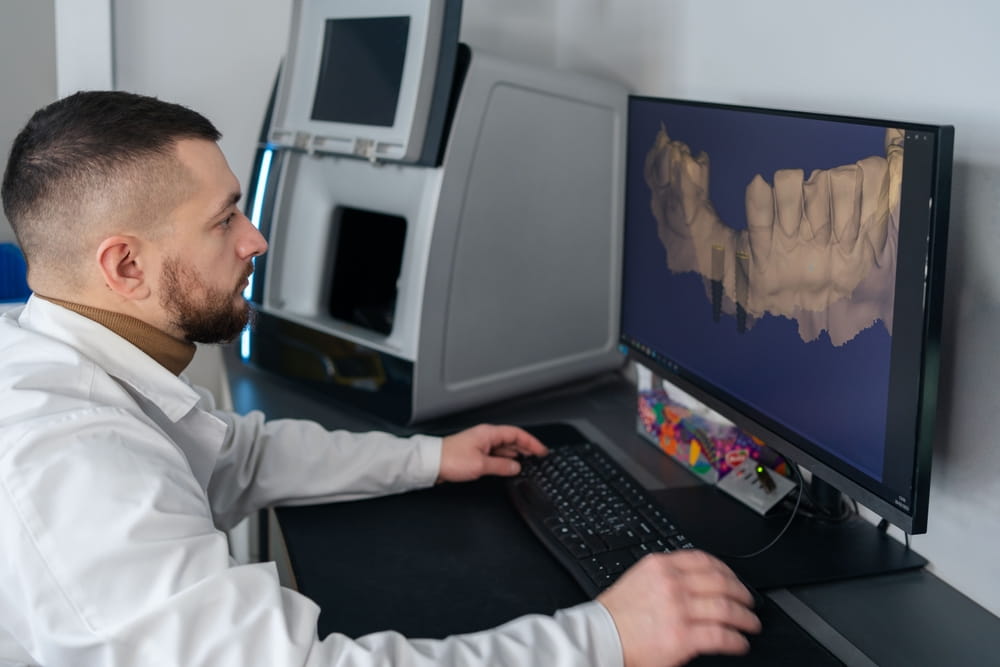
Digital planning software combines CBCT imaging with intraoral scans to evaluate bone anatomy alongside the planned prosthetic outcome. This allows clinicians to identify the ideal implant position for supporting both function and esthetics.
Comprehensive implant restorations benefit significantly from this approach because implant position, angulation, and restorative contours can all be evaluated together before treatment begins.
Digital workflows have transformed the way emergence profiles are planned and fabricated. Intraoral scans capture highly detailed soft tissue anatomy, while CAD software allows technicians to design restorations with exceptional precision.
Virtual models enable clinicians and laboratory technicians to evaluate contours before manufacturing begins. Adjustments can be made digitally to optimize tissue support, emergence angle, and crown shape while reducing the need for chairside modifications.
These technologies improve consistency across cases and make it easier to reproduce natural emergence profiles that complement surrounding tissues.
Custom abutments often play an important role in simplifying emergence profile design. Unlike stock abutments, custom components can be designed to support the unique anatomy of each patient’s soft tissue.
By shaping the transition from the implant platform to the crown more precisely, custom abutments help create smoother contours and improved tissue adaptation.
This individualized approach is particularly beneficial in the esthetic zone, where even small improvements in contour can significantly enhance the appearance of the final restoration.
Creating predictable emergence profiles depends on effective collaboration between the clinician and dental laboratory. Comprehensive records—including digital scans, CBCT data, photographs, provisional restorations, and tissue evaluations—provide technicians with the information needed to develop appropriate restorative contours.
Provisional restorations can also serve as valuable guides. Soft tissue often adapts to the contours established during provisionalization, allowing clinicians and technicians to duplicate successful tissue architecture in the definitive restoration.
Strong communication throughout treatment reduces uncertainty while improving consistency from diagnosis through final delivery.
While esthetics are important, emergence profile design must also support long-term oral health. Restorations should allow patients to clean effectively around implant components without creating inaccessible areas where plaque can accumulate.
Contours that are too bulky may compromise hygiene even if they appear attractive initially. Likewise, overly narrow contours may fail to provide adequate tissue support.
When implant restorations are integrated alongside fixed restorations or removable restorations, maintaining consistent contours across all prosthetic components contributes to both esthetic harmony and functional stability.
Emergence profile design is one of the defining factors in successful implant restorations. By carefully considering implant position, soft tissue anatomy, restorative contours, and long-term maintenance, clinicians can create implant crowns that look natural and function predictably for years to come.
Digital workflows, custom restorative components, and close collaboration with the dental laboratory have made this process more precise than ever before. Panam Dental Lab, serving Savannah, Houston, and Sandy, recognizes that thoughtful emergence profile design supports healthier soft tissues, improved esthetics, and implant restorations that blend seamlessly into every patient’s smile.
Buser D, Martin W, Belser UC. Optimizing esthetics for implant restorations in the anterior maxilla. Periodontology 2000.
Misch CE. Dental Implant Prosthetics. Elsevier.
Joda T, Gallucci GO. Digital technologies in implant prosthodontics. Journal of Prosthetic Dentistry.