Successful implant treatment depends on more than achieving stability in the bone. The three-dimensional position of an implant influences nearly every aspect of the final restoration, including crown contour, screw-access location, occlusal loading, soft-tissue support, and overall esthetics. Even a well-integrated implant can present restorative challenges when its angulation does not align with the intended prosthetic result.
Understanding these relationships allows clinicians to anticipate complications before the crown reaches the delivery appointment. Digital planning, complete clinical records, and communication with the laboratory can help determine when standard components are appropriate and when customized solutions may be needed. Drawing on implant cases submitted by practices in Savannah, Houston, Sandy, and other communities, Panam Dental Lab sees how thoughtful angulation planning can make the restorative phase more predictable.
Implant angulation refers to the three-dimensional orientation of a dental implant within the jaw. Rather than simply considering whether an implant is vertical, clinicians evaluate its position relative to adjacent teeth, opposing dentition, bone anatomy, and the planned restoration.
Ideally, implants should emerge through the center of the planned restoration while allowing occlusal forces to be distributed as evenly as possible. Proper angulation helps create restorations that are easier to clean, mechanically stable, and esthetically pleasing.
Small deviations can often be managed successfully, but larger discrepancies may complicate restorative procedures and require additional planning.
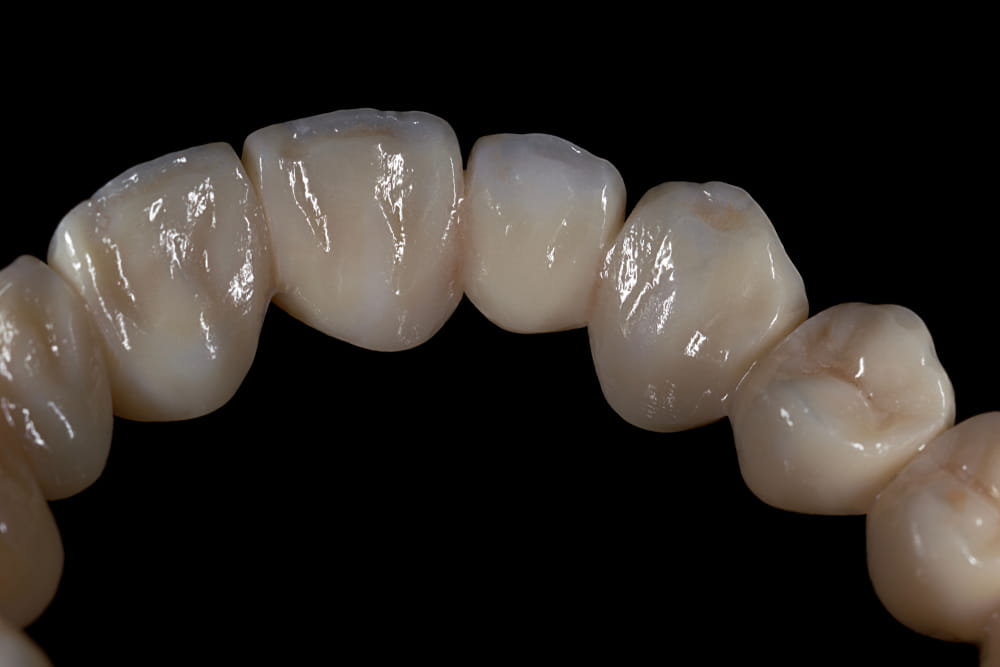
Implant position has a significant influence on the appearance of the final restoration. An implant that emerges too far facially, lingually, mesially, or distally may compromise the contour of the crown and make it difficult to create a natural-looking emergence profile.
In the esthetic zone, implant angulation also affects gingival support and the appearance of surrounding soft tissues. Even slight differences in emergence can influence how light reflects from the restoration and how well it blends with adjacent teeth.
Careful restorative planning helps ensure that the final prosthesis appears harmonious within the patient’s smile while maintaining healthy surrounding tissues.
Proper implant angulation contributes directly to favorable force distribution during chewing. When implants are aligned appropriately, occlusal forces travel more efficiently through the restoration and into the supporting bone.
Excessive angulation may create off-axis loading, increasing stress on prosthetic components such as abutment screws, restorative materials, and the implant itself. Over time, these mechanical forces may contribute to complications including screw loosening, component wear, or restoration fracture.
Thoughtful treatment planning helps minimize these risks while promoting long-term stability.
Although modern restorative techniques can compensate for many implant positioning challenges, significant angulation may increase treatment complexity.
Excessive implant angulation can affect crown contours, create bulky restorations, reduce available restorative space, or complicate screw-access positioning. These issues may influence both function and esthetics if not addressed during planning.
Fortunately, advances in restorative components and laboratory techniques allow many of these situations to be managed successfully while maintaining predictable clinical outcomes.
Within comprehensive implant restorations, careful planning allows clinicians and technicians to identify these challenges before fabrication begins.
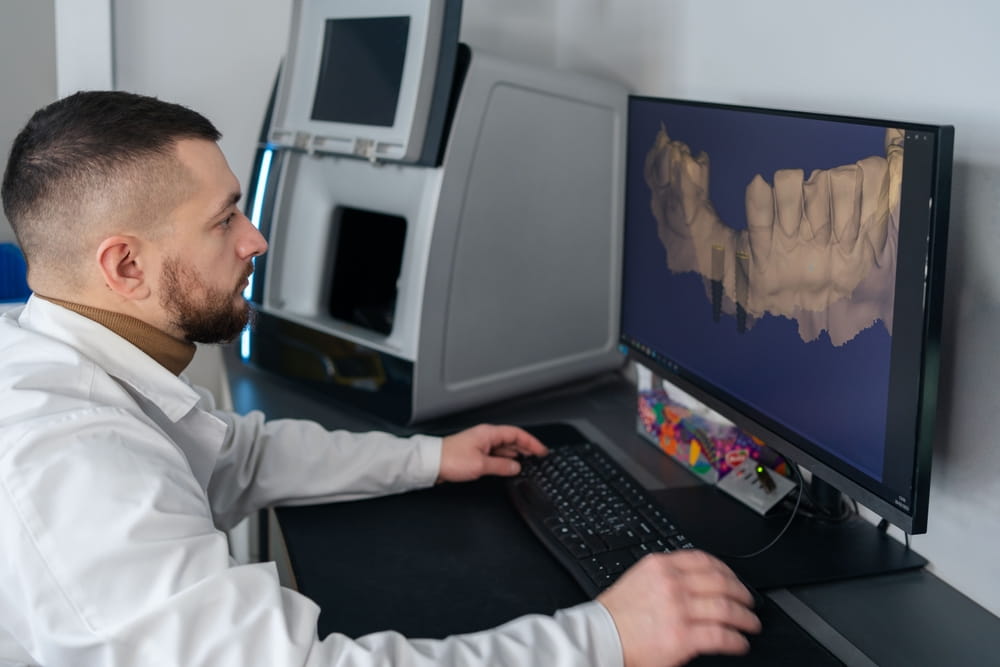
Digital dentistry has transformed implant treatment planning. Cone beam computed tomography (CBCT), intraoral scanning, and digital planning software allow clinicians to visualize bone anatomy alongside the planned restoration before surgery begins.
This prosthetically driven approach helps determine the ideal implant position based on the final restoration rather than bone anatomy alone. Surgical guides fabricated from digital planning data further improve placement accuracy during implant surgery.
Digital workflows also improve communication between clinicians and laboratories by allowing treatment teams to review implant positioning together before restorative treatment begins.
Dental laboratories play a critical role in compensating for implant angulation when restorative treatment begins. Modern restorative components include angled abutments, custom abutments, and CAD/CAM solutions that help optimize restoration contours even when implant positioning is less than ideal.
Custom-designed abutments can improve emergence profiles, optimize crown support, and enhance esthetics while maintaining proper function. Laboratory technicians evaluate implant position carefully to recommend restorative solutions that align with the clinician’s treatment objectives.
This collaboration allows many challenging implant cases to be restored successfully without compromising long-term performance.
Successful implant restorations rely on detailed communication between the dental practice and laboratory. Complete records—including digital scans, radiographs, CBCT data, photographs, implant system information, and restorative goals—allow technicians to develop restorations that accommodate implant positioning effectively.
Open collaboration also allows potential concerns to be identified before fabrication begins. Early discussions regarding angulation, emergence profile, occlusion, and material selection reduce the likelihood of unexpected complications during delivery.
Complex restorative cases frequently involve coordination with fixed restorations to ensure implant-supported crowns integrate naturally with adjacent teeth while maintaining balanced occlusion.
Implant angulation also influences long-term maintenance. Restorations should be designed to allow patients to clean effectively around implant components and maintain healthy peri-implant tissues.
Improper emergence profiles created by unfavorable angulation may make oral hygiene more difficult, increasing the importance of patient education and regular maintenance appointments.
Restorative planning should always balance esthetics with accessibility, ensuring that patients can maintain their implant restorations successfully over time.
When implants are incorporated into broader treatment plans that also include removable restorations, coordinated design becomes especially important to achieve stable function while supporting long-term oral health.
Implant angulation should be evaluated as part of the complete restorative plan rather than treated as an isolated surgical consideration. Its influence extends to force distribution, emergence contours, cleansability, component selection, and the natural appearance of the final crown.
When ideal placement is not possible, angled screw channels, custom abutments, and carefully designed contours may help manage the discrepancy. The best results still begin with coordinated planning among the clinician, surgeon, and laboratory. Through its work with dental teams in Savannah, Houston, Sandy, and beyond, Panam Dental Lab supports a restoratively driven approach in which implant position and final prosthetic design are considered together from the beginning.
Misch CE. Dental Implant Prosthetics. Elsevier.
Buser D, Martin W, Belser UC. Optimizing esthetics for implant restorations in the anterior maxilla. Periodontology 2000.
Joda T, Gallucci GO. Digital technologies in implant prosthodontics. Journal of Prosthetic Dentistry.